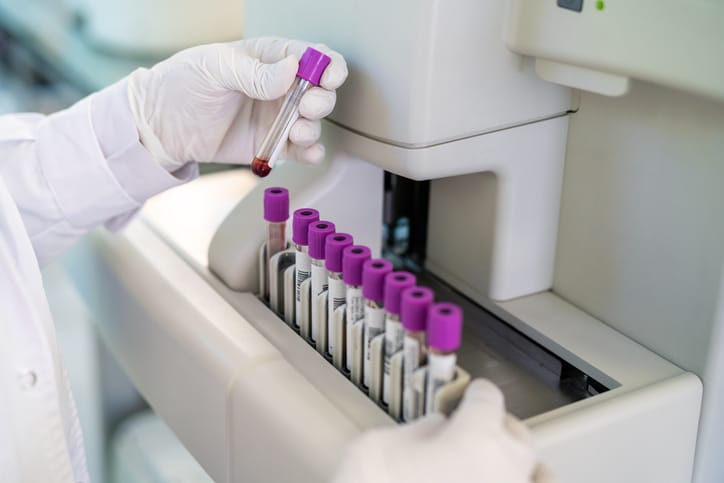
Centrifugal therapeutic plasma exchange safe for pediatric patients
A Japanese study of centrifugal therapeutic plasma exchange, a therapy used to treat FNAIT, demonstrated a 100% completion rate.

A Japanese study of centrifugal therapeutic plasma exchange, a therapy used to treat FNAIT, demonstrated a 100% completion rate.

Implementing a first-trimester scan substantially increased the detection of fetal anomalies compared to standard second-trimester screening.
A review highlighted limited evidence guiding transfusion in newborns with massive bleeding, with uncertainty around timing and thresholds.

Anti-HPA-1a antibodies inhibit the receptors αvβ3 and αIIbβ3 in FNAIT, with greater levels of inhibition indicating more severe disease.
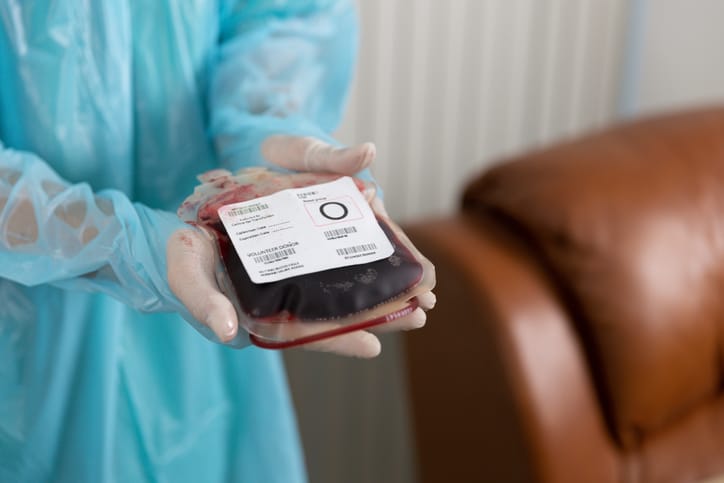
A recent study found inherited blood disorders and blood clotting disorders are the main causes for neonatal blood transfusions in India.

A case report highlighted how a rare but serious fetal blood loss condition can develop suddenly, even after recent normal scans.

A recent review outlined how advances in immunology, screening and treatment are reshaping the understanding of FNAIT.
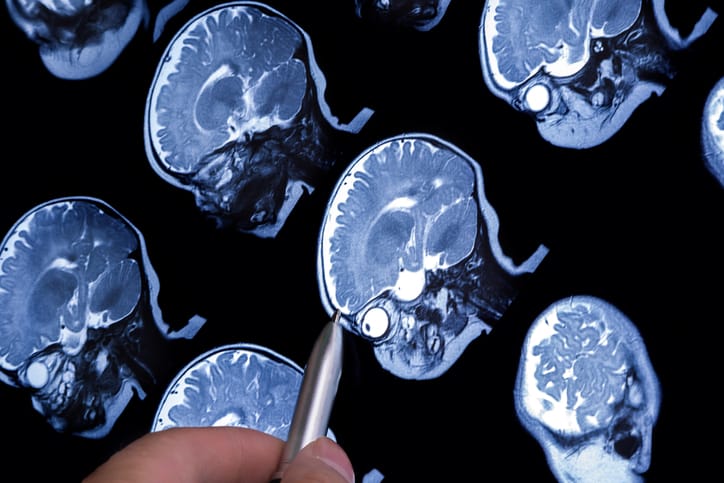
More red blood cell transfusions were linked to a higher risk of brain injury and eye disease in very preterm infants.

Clearer definitions and better data systems would help physicians and policy makers better understand risks, the society stated.

AI can improve blood donation and patient care, but experts emphasize the need for ethical safeguards and human oversight to ensure safety.