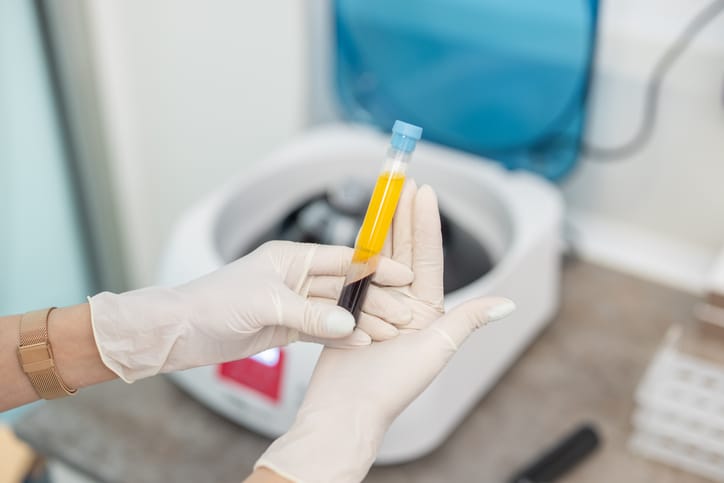
Study shows cold-stored platelets should not be continuously agitated
Continuously agitating cold-stored platelets for transfusion does not improve platelet quality or function, according to recent findings.

Continuously agitating cold-stored platelets for transfusion does not improve platelet quality or function, according to recent findings.

Sucrose and skin-to-skin contact can reduce pain during blood sampling in newborns, including those undergoing repeated testing.

A study of 14,114 pregnant women found few met high-risk criteria for FNAIT, with fewer risk factors among Black and Asian women.

Those who reported adverse pregnancy outcomes reported higher rates of social risk factors such as depression, anxiety and smoking.

Prenatal exposure was linked to higher long-term ophthalmologic morbidity in preterm children, including pregnancies affected by FNAIT.

Maternal and neonatal disorder deaths have fallen worldwide since 1990, but the heaviest burden still falls on the world’s poorest regions.

Home telemonitoring may be an option for selected high-risk pregnancies, based on careful patient selection and clinical protocols.
High-risk pregnancies, including pregnancies affected by conditions such as FNAIT, may require changing care plans as risks evolve.
The same type of cfDNA technology used to assess fetal HPA status in FNAIT can also reveal unexpected genetic findings.

Anxiety during pregnancy was linked to poorer birth outcomes regardless of medication treatment, according to a recent study.