

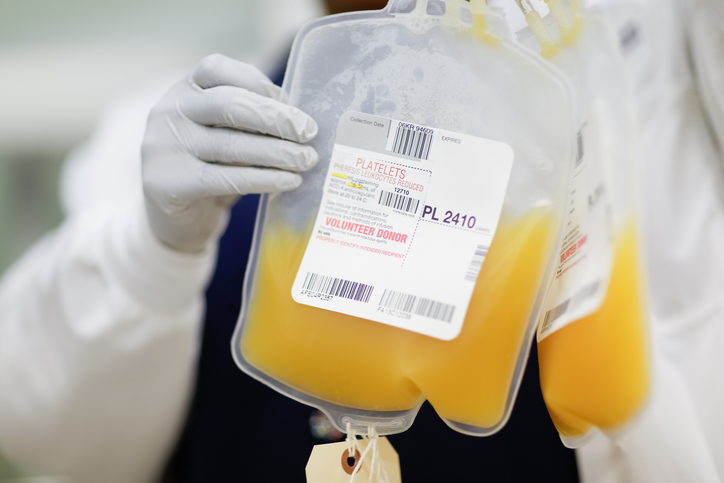
Platelet transfusionPlatelet transfusion A treatment for newborns with very low platelet counts that ideally uses HPA-compatible or washed maternal platelets. is the treatment of choice for newborns with a suspected diagnosis of fetal and neonatal alloimmune thrombocytopenia (FNAITFetal and neonatal alloimmune thrombocytopenia A rare condition in which a mother’s immune system attacks fetal platelets, leading to dangerously low platelet levels before and/or after birth.).
It can also be used during pregnancy to treat fetuses affected by FNAIT, but is less common due to the associated risk of causing bleeding in the fetus. Platelet transfusion is a life-saving procedure in newborns with a very low platelet count and/or unexplained bleeding.
What is FNAIT?
FNAIT is a rare autoimmune disease that affects 0.1% of pregnancies. It occurs when a mother and her baby’s blood platelets are mismatched, as a result of an antigen the baby has inherited from its father. The mother’s immune system then develops antibodies, which attack and destroy her baby’s blood platelets, leading to abnormally low platelet levels (thrombocytopeniaThrombocytopenia A platelet count that is lower than normal.) in the baby. This stops the blood from clotting and can result in hemorrhages in the brain, stomach, kidneys, liver and spinal cord.
Learn more about FNAIT causes and risk factors
It can be a potentially life-threatening condition, with newborns affected by FNAIT requiring urgent platelet transfusions and intravenous immunoglobulinIntravenous immunoglobulin A treatment given to pregnant women with a history of FNAIT or known alloantibodies. IVIG reduces the immune reaction against fetal platelets. to avoid long-term neurological consequences or death.
FNAIT is thought to be underdiagnosed as there is no prenatal screening, and most cases are detected in newborns.
When is a platelet transfusion needed?
In newborns, FNAIT is suspected based on symptoms such as bruising, a red pinprick red rash, purple discoloration of the skin, unexplained bleeding or a low platelet countPlatelet count A measure of how many platelets are in the blood. FNAIT is characterized by severely reduced counts in a fetus or newborn. on a blood test. Thrombocytopenia in newborns is defined by a platelet count of less than 150 x 109/l and if it falls below this level, thrombocytopenia is considered to be severe.
Evidence has shown that if the platelet count falls below 30 x 109/l, there is a greater risk of intracranial hemorrhageBrain bleed Bleeding inside the fetal brain, also known as an intracranial hemorrhage. In FNAIT, it's often caused by severe thrombocytopenia and can lead to long-term disability or death. (ICH). This is a serious complication of FNAIT and can result in long-term neurological problems or even death. This is why immediate treatment is recommended without necessarily confirmation, with tests confirming FNAIT sometimes taking a few days for results.
If thrombocytopenia is detected and FNAIT is suspected or confirmed, a platelet transfusion is the standard treatment. It involves injecting platelets that are HPAHuman platelet antigen Proteins found on the surface of platelets. Incompatibility between maternal and fetal human platelet antigens can trigger FNAIT.-compatible with the mother and sourced from donors or the mother, into the newborn to stabilize his/her platelet levels.
Following the transfusion, the baby’s platelet levels are closely monitored. If they continue to fall, another transfusion will be required. Unless the newborn suffers cerebral bleeding, platelets levels should rise, and there should be no long-term effects.
Platelet transfusions have been known to treat fetuses to reduce the risk of severe thrombocytopeniaSevere thrombocytopenia A dangerously low platelet count, typically below 50,000 platelets per microliter and sometimes far lower in FNAIT. or ICH. However, as a platelet transfusion performed on a fetus punctures the umbilical cord, the risk of bleeding is usually judged too great.