

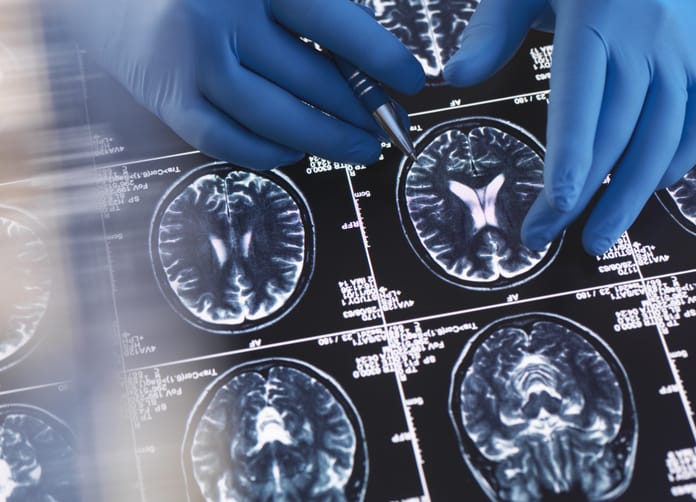
One of the most severe complications of fetal and neonatal alloimmune thrombocytopenia (FNAIT) is intracranial hemorrhage (ICH). Put simply, ICH is bleeding in the brain.
Normally, should any bleeding occur, platelets jump into action and form a clot to stem the bleeding. Unfortunately, in the case of FNAIT, platelets are in short supply, meaning that bleeding can occur for an extended period of time. Because the skull has a fixed volume, extended bleeding in the brain can result in severe complications, including death.
Porencephalic cysts due to intracranial hemorrhage
In some cases, brain cysts can occur as a complication of ICH. These cysts are fluid-filled and can result from brain tissue injury. A simple explanation as to how these brain cysts form is that they are the remnant of brain tissue damage caused by bleeding in the brain.
A porencephalic cyst is a fluid-filled cavity within the brain that develops following a vascular accident (like a stroke or hemorrhage), or brain injury from infection or trauma, often in the perinatal period. The resulting damage creates the cavity, which is then filled with cerebrospinal fluid (CSF).
Symptoms of porencephalic cysts
The severity of symptoms depends on the cyst’s size and location, but they can include:
- Headaches
- Seizures
- Developmental delays
- Weakness in one side of the body
- Difficulty with balance and walking
Treatment of porencephalic cysts
Treatment focuses on managing symptoms and may include:
- Medications: Anti-seizure drugs and medications for pain or muscle tightness may be used.
- Therapies: Physical therapy, occupational therapy and speech therapy can help improve function.
- Surgery: In some cases, surgery might be an option to drain the fluid or remove the cyst.
Read more about FNAIT testing and diagnosis
Focus on preventing ICH
Once you and your child have been diagnosed with FNAIT, your doctor will do everything possible to prevent ICH, widely considered the most severe complication of FNAIT. To achieve this, your doctor may administer certain therapies during pregnancy that may help.
After delivery, your child will be monitored in an intensive ward to ensure that your child’s platelet levels can be safely restored and that ICH and other complications do not occur.
The best way to prevent these cysts is to focus on preventing ICH from occurring in the first place. To increase the odds that an ICH does not ever occur, you must work with your doctor, including attending all scheduled appointments and demonstrating a willingness to accept prescribed therapies.
If your child is unfortunate enough to suffer from an ICH, your doctor will do all that they can to stabilize your child and minimize complications. These typically include brain scans, meaning that any brain cysts that may be formed after the event will be visible and can be dealt with appropriately.
It is important to not focus on one or two complications, as each case is different. For example, one infant may experience neurological difficulties due to brain damage, while another may experience sensory abnormalities.
In summary, the brain is a very precious organ that deserves to be protected at all costs. The primary goal is not to prevent one or two complications, but to avoid complications altogether by ensuring that ICH does not occur at all.
Sign up here to get the latest news, perspectives, and information about FNAIT sent directly to your inbox. Registration is free and only takes a minute.