

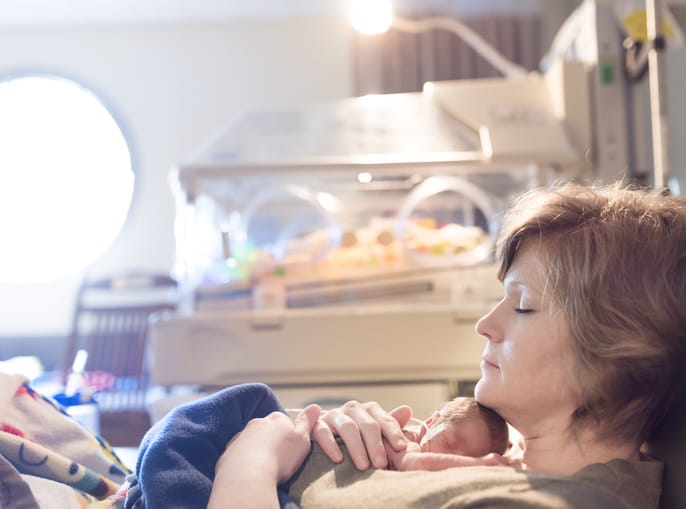
If you are a new parent, nothing can be as exciting as meeting your newborn for the first time. But if your newborn was diagnosed with a condition or rare disease such as fetal and neonatal alloimmune thrombocytopenia (FNAIT), you may have been separated from your child during some or all of your hospital stay.
If this is the case, try not to worry—there is still plenty of time to create that special bond with your newborn.
Tips for bonding in the NICU
It is always difficult for parents to see their child in distress, even if for a short amount of time. If your child is admitted into a neonatal intensive care unit (NICU), the tubes and cannula inserted can be a difficult sight to process. Nevertheless, rest assured that your child is receiving the best care possible, and that medical interventions in FNAIT are most often temporary.
While NICUs have various visiting hours, you may spend a substantial amount of time at the bedside of your child. Generally, patients are not recommended to spend too long with children in neonatal intensive care due to the risk of infection and the possibility that your presence may impede the work of trained doctors. Still, you can spend the time you are allotted sitting by your child and talking to them. After hearing your voice throughout pregnancy, this may be soothing to your infant.
Typically, infants with FNAIT are discharged within days, so you needn’t wait long to be reunited with your child. FNAIT is largely a disease of pregnancy; while long-term neurological harm may be present if the child has experienced bleeding in the brain, most patients recover quickly after initial interventions are initiated and platelet levels are replenished.
Bonding methods during hospital stay
One of the widely recommended ways to bond with a newborn is via skin-to-skin contact. This is an instantaneous bonding exercise, with parents often experiencing an emotional bond with their child upon this simple act. It is also colloquially known as kangaroo care. It has a number of benefits, including regulating the baby’s heart rate, body temperature and stress levels. If your child has to stay in the NICU, ask your doctor if you can initiate skin-to-skin before the child leaves the room.
There are many other ways to bond with your child both during your stay and after discharge. Breastfeeding itself can be a deeply bonding experience, as well as feeding via a bottle. This allows the child to develop a familiarity with you as the parent.
Read more about FNAIT testing and diagnosis
Many parents are fond of communicating with their child, even if it is just gibberish in the beginning. Familiarity with your voice, facial expressions and mannerisms can be a bonding experience that only becomes stronger over time.
Bonding is a process that takes time. As such, do not feel discouraged if it takes a while to connect your child. With time, effort and perseverance, you should find the bonding experience to be easier and more rewarding.
Sign up here to get the latest news, perspectives, and information about FNAIT sent directly to your inbox. Registration is free and only takes a minute.