

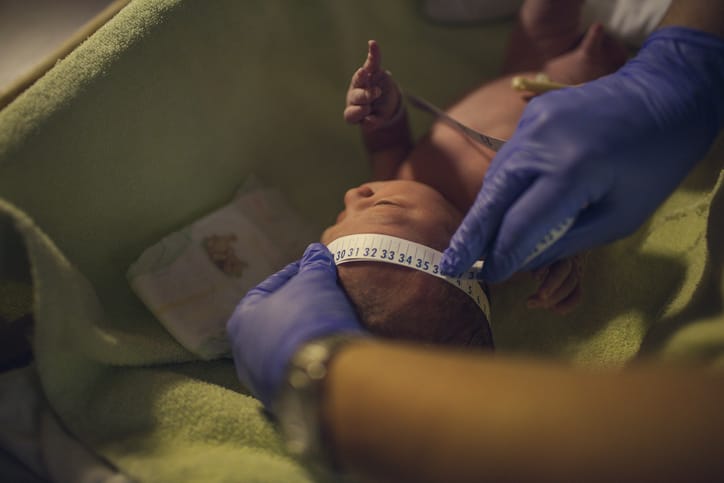
If a newborn is suspected of having fetal and neonatal alloimmune thrombocytopenia (FNAIT), their doctor may want to start treatment before diagnosis is confirmed.
Particularly in first-affected pregnancies, if symptoms indicate FNAIT, the doctor may not want to wait for confirmation, opting to closely monitor the newborn and, if needed, order platelet transfusions to boost platelet levels. Following discharge, this monitoring continues to ensure good outcomes.
When is FNAIT suspected in newborns?
If FNAIT has not been detected during pregnancy or in previous pregnancies, symptoms post-delivery may come as a surprise. FNAIT is suspected based on a combination of the following symptoms:
- red pinprick bleeding (petechiae) or red/purple patches of skin discoloration (purpura)
- bruising
- unexplained bleeding such as from cutting the umbilical cord, circumcision or needle pricks
- cephalohematoma and a low level of blood platelets (thrombocytopenia)
More serious and less obvious symptoms include bleeding in the brain, gastrointestinal tract, lungs and eyes.
How pediatric neurologists monitor newborns suspected of FNAIT
FNAIT in newborns may be suspected based on a combination of symptoms. Urgent treatment is necessary to stimulate platelet production and prevent long-term consequences, such as permanent neurological damage. Pediatric neurologists monitor newborns suspected of FNAIT throughout treatment to ensure that platelet counts are increasing and symptoms are resolving.
In addition to monitoring blood pressure, breathing and heart rate, they observe newborn behavior to check for lethargy or distress. and track the evolution of symptoms. The tools they use during this process may include:
- Cranial ultrasound: To monitor bleeding on the brain and how it is resolving or evolving.
- Ultrasound: To monitor any bleeding in the gastrointestinal tract, lungs or eyes.
- MRI: For more detailed images if abnormal findings.
- Neurological assessments: To evaluate reflexes, alertness, muscle tone and coordination.
- Blood tests: To check if platelet counts are rising and levels of maternal antibodies are falling.
How pediatric neurologists monitor infants after FNAIT diagnosis
Newborns suspected of FNAIT should receive treatment and monitoring in a hospital or in the NICU. Once platelet levels return to normal and symptoms are alleviated, the infant may be discharged.
A diagnosis of FNAIT is confirmed following maternal platelet antibody screening, HPA genotyping and other tests like flow cytometry or monoclonal antibody immobilization of platelet antigens (MAIPA). These results may only be available one to three weeks following testing, depending on your state and region. In many cases, FNAIT in the newborn will already have been successfully treated.
Longer-term monitoring of the infant after diagnosis includes growth and developmental assessments, imaging and follow-up appointments based on your doctor’s recommendation.
Sign up here to get the latest news, perspectives, and information about FNAIT sent directly to your inbox. Registration is free and only takes a minute.