

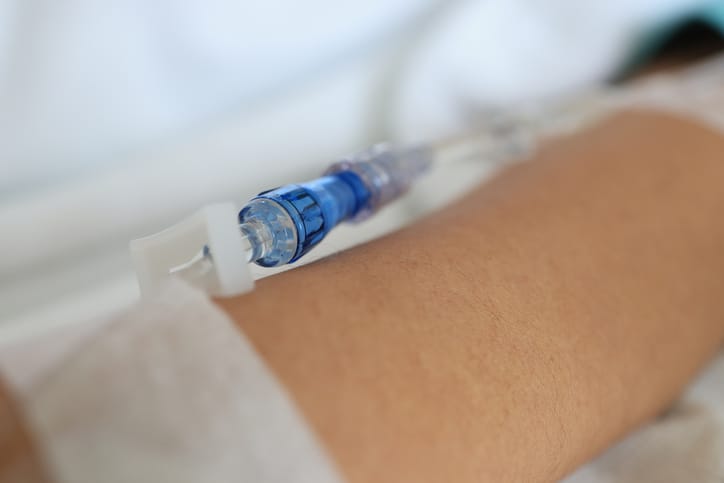
In pregnancies affected by or at risk of fetal and neonatal alloimmune thrombocytopenia (FNAITFetal and neonatal alloimmune thrombocytopenia A rare condition in which a mother’s immune system attacks fetal platelets, leading to dangerously low platelet levels before and/or after birth.), intravenous immunoglobulinIntravenous immunoglobulin A treatment given to pregnant women with a history of FNAIT or known alloantibodies. IVIG reduces the immune reaction against fetal platelets. (IVIGIntravenous immunoglobulin A treatment given to pregnant women with a history of FNAIT or known alloantibodies. IVIG reduces the immune reaction against fetal platelets.) is often administered to reduce the risk of severe fetal anemia.
IVIG reduces the risk of bleeding complications by making it harder for maternal antibodies to target, attack and destroy fetal platelets.
What is IVIG?
IVIG is made up of human antibodies derived from the plasma of donated blood. It is given intravenously to help manage immunodeficiency, autoimmune diseases and infectious and inflammatory conditions. In FNAIT-affected pregnancies, it works by suppressing the response of the mother’s immune system to her baby’s ‘foreign’ platelets.
If platelet antigen incompatibility between mother and baby has been detected, there is a risk of FNAIT developing. In this case or if FNAIT has already occurred in previous pregnancies, close fetal monitoringFetal monitoring Can include Ultrasounds, Doppler studies and other evaluations that help the care team track fetal health and watch for potential complications. is required.
This may include fetal ultrasounds every two to four weeks to check for bleeding. If bleeding is detected, IVIG is recommended to prevent serious complications. It is effective in reducing the risk of bleeding complications such as intracranial hemorrhageBrain bleed Bleeding inside the fetal brain, also known as an intracranial hemorrhage. In FNAIT, it's often caused by severe thrombocytopenia and can lead to long-term disability or death. (ICH), which can be potentially life-threatening.
How does IVIG affect the mother’s immune system?
Doses of IVIG are usually given weekly starting from 12 to 16 weeks’ gestation in pregnancies at high risk of FNAIT. They then continue throughout the duration of the pregnancy.
During this time, IVIG targets the pregnant mother’s immune response to her baby’s platelet-specific antigens, blocking antibody-mediated fetal platelet destruction. It also impedes the passage of harmful maternal antibodies across the placenta.
However, IVIG doesn’t suppress the mother’s immune system or weaken her immunity. Her immune system continues to function normally. This means she doesn’t become immunocompromised as a result of IVIG, nor is she more likely to catch contagious diseases or infections.
Side effects have been reported in pregnant mothers who receive IVIG, but they are often mild and temporary. The most common side effects may include headache, fatigue, nausea, vomiting, fever or muscle and joint pain. Other more serious side effects may occur, but they are considered rare.
It is worth noting that live vaccines must not be administered three weeks prior to IVIG or three months after receiving a dose of IVIG, as their efficacy may be affected. Ask your doctor for more information.
Sign up here to get the latest news, perspectives, and information about FNAIT sent directly to your inbox. Registration is free and only takes a minute.