

Common symptoms of fetal and neonatal alloimmune thrombocytopenia (FNAITFetal and neonatal alloimmune thrombocytopenia A rare condition in which a mother’s immune system attacks fetal platelets, leading to dangerously low platelet levels before and/or after birth.) can include a low platelet countPlatelet count A measure of how many platelets are in the blood. FNAIT is characterized by severely reduced counts in a fetus or newborn., unexplained bleeding and bruising. In severe cases of FNAIT, bleeding can occur in the gastrointestinal tract, lungs, brain and eyes, with varying degrees of severity.
Intracranial hemorrhageBrain bleed Bleeding inside the fetal brain, also known as an intracranial hemorrhage. In FNAIT, it's often caused by severe thrombocytopenia and can lead to long-term disability or death. (ICH) is the most severe complication, potentially causing development, neurological and vision damage, and even blindness. In milder cases, eye-related bleeding often resolves without any long-term damage, but regular follow-up appointments are required to know for sure.
How can the eyes be affected by FNAIT?
As the baby’s platelets are destroyed, the blood loses its ability to clot. As a result, unexplained and often uncontrolled bleeding occurs. This is possible in the internal organs, brain and eyes. Bleeding on the brain can affect the optic nerve, visual cortex or retina, causing short or long-term vision damage.
Learn more about FNAIT signs and symptoms
Cortical blindness is a rare complication of intracranial hemorrhage. Bleeding in the eyes, known as retinal bleeding, occurs in 7% of cases and is caused by small bleeds in the retina. These are often less likely to cause long-term damage, but an eye specialist will monitor healing and test for any potential vision damage.
Early detection of FNAIT and urgent medical intervention to boost blood platelet levels is key to avoiding permanent eye damage in FNAIT-affected babies.
What to expect from ophthalmology follow-up appointments
If bleeding in the eye occurs in FNAIT-affected babies, the number of follow-up appointments will depend on the severity of eye-related symptoms.
Mild retinal bleeding: A post-discharge appointment with an eye specialist will need to be scheduled to assess the impact of FNAIT on the baby’s vision. Regular appointments will be required to monitor ongoing recovery.
Significant retinal bleeding: An appointment with an eye specialist will usually be scheduled before discharge, with regular follow-up appointments to close monitor the baby’s eye health and healing.
Intracranial hemorrhage: Monitoring of babies recovering from ICH involves a multidisciplinary team, including an eye specialist. Regular appointments and vision assessments will be scheduled.
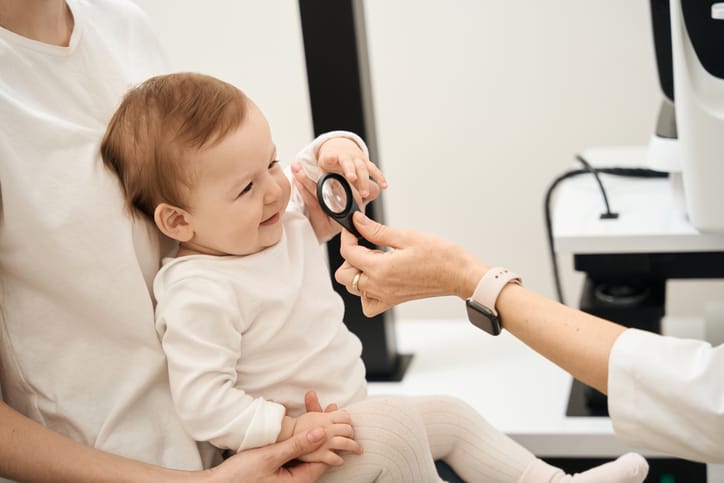
An eye specialist will add dilating drops in the baby’s eyes to have a clear view of the retina and the inside of the eye. At each appointment, the healing process will be monitored, and the doctor will look for any scarring.
The baby’s vision will be tested to ensure any issues are identified early, to allow for treatment or correction where possible. Over time, the eye specialist will track the evolution of the baby’s vision to ensure vision development milestones are being met.
Sign up here to get the latest news, perspectives, and information about FNAIT sent directly to your inbox. Registration is free and only takes a minute.